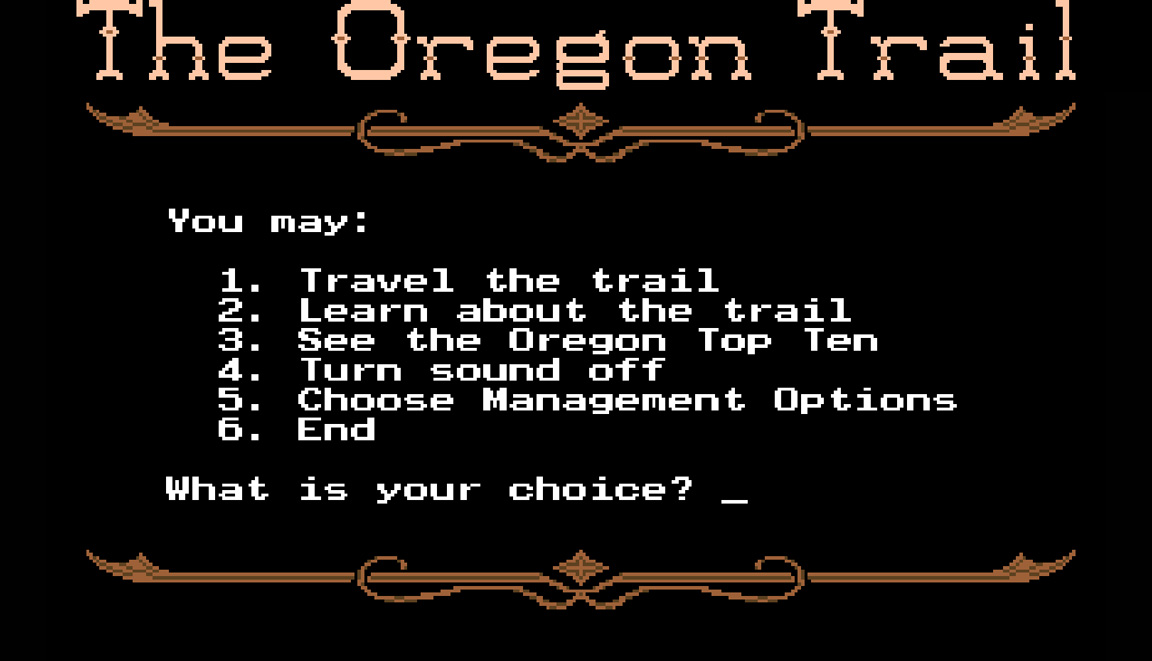
Oregon Trail is a classic educational computer game that was originally developed in 1971 by Don Rawitsch, Bill Heinemann, and Paul Dillenberger. The game was created to teach schoolchildren about the life of a 19th-century pioneer traveling along the Oregon Trail. It has since become one of the most iconic and beloved edutainment games ever.
Gameplay
In Oregon Trail Online, players assume the role of a wagon leader guiding a group of settlers from Independence, Missouri, to the Willamette Valley in Oregon in 1848. The journey is fraught with challenges, and players must make strategic decisions to ensure the survival of their party. Key aspects of the gameplay include:
- Resource Management: Players must manage supplies such as food, clothing, ammunition, and spare parts for their wagon.
- Health Management: Keeping the settlers healthy is crucial. Players must deal with diseases, injuries, and other health-related issues.
- Hunting: Players can hunt for food, but must balance the need for food with the risk of depleting ammunition and time.
- Rivers and Terrain: Players must navigate various geographical obstacles, including rivers and rough terrain, which can impact the journey.
- Random Events: The game includes events that can affect the party, such as weather changes, broken wagon parts, and encounters with wild animals.
Educational Value
The game was initially designed as an educational tool to teach students about the historical and logistical challenges faced by pioneers. It provides insights into the hardships and decision-making processes of the time, making it a valuable learning experience.
Evolution and Legacy
Since its original release, Oregon Trail has undergone numerous updates and re-releases, including graphical enhancements and new gameplay elements. It has inspired many sequels and spin-offs, maintaining its relevance and popularity over the decades.
- 1971: The original text-based version was created.
- 1985: The Minnesota Educational Computing Consortium (MECC) developed and published the game and became widely popular.
- Modern Versions: Newer versions of the game have been released, including mobile apps and reimagined editions that pay homage to the original while introducing new features.
Cultural Impact
Oregon Trail Online has had a significant cultural impact, becoming a nostalgic favorite for many who played it during their school years. Its influence extends beyond gaming, with references appearing in various forms of media and popular culture.